Battery Backup Technology in LED Bulbs: How It Works and Why It Matters
Imagine a stormy night, and suddenly the power goes out. Everything turns dark, but your room stays bright because your LED bulbs keep shining. This isn’t magic—it’s the power of battery backup technology in LED bulbs. Over the past few years, this innovation has made life easier, safer, and more comfortable during blackouts. If you’ve ever wondered how these smart bulbs work or how to choose the best one, this guide will answer all your questions in simple, clear language.
What Is Battery Backup Technology In Led Bulbs?
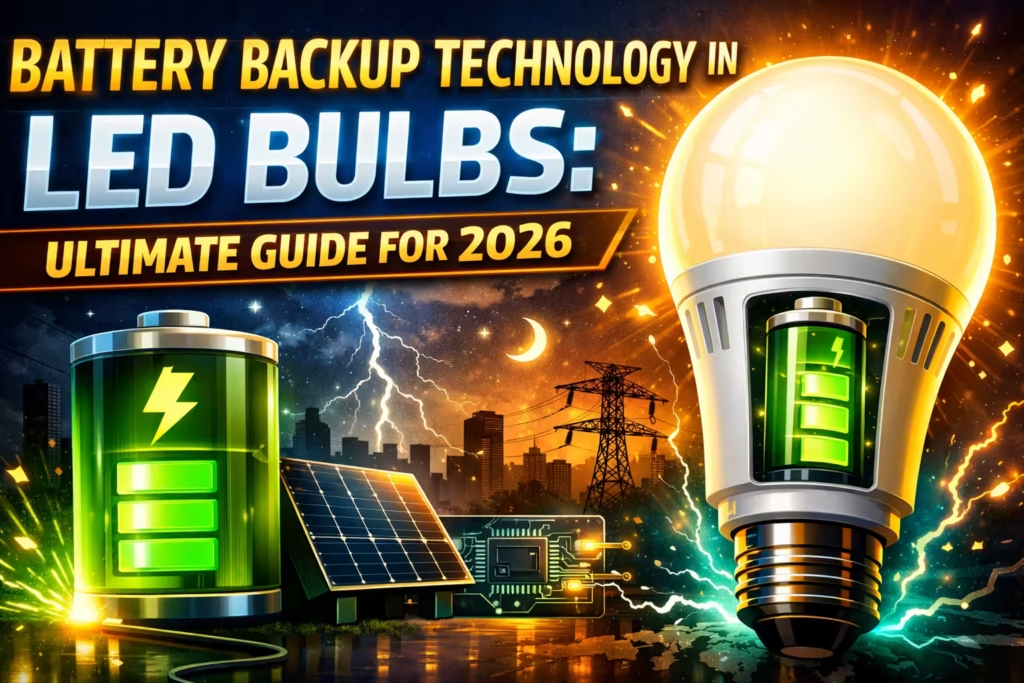
Battery backup technology in LED bulbs means the bulb has a built-in battery inside its base. When you use the bulb in a normal socket, it works just like any other LED light. The battery stays charged while the power is on. If the electricity goes out, the bulb senses the loss and automatically switches to battery power. This helps you keep light in important places like your bedroom, hallway, or stairs, even during an outage.
The technology combines three main parts:
- An LED light for energy-efficient lighting.
- A rechargeable battery to store power.
- A smart circuit to switch between regular and battery power.
This smart design means you don’t need special wiring or extra equipment. Just screw in the bulb and use it like any other light.
How Battery Backup Led Bulbs Work
The heart of this technology lies in the automatic switching circuit. Here’s what happens:
- Normal Operation: The bulb uses electricity from the grid. The battery charges in the background.
- Power Failure: The smart circuit detects the outage in milliseconds. The bulb switches to its internal battery. Light stays on, usually at a slightly lower brightness to save battery.
- Restoration: When power returns, the bulb switches back to the grid and the battery starts charging again.
Most models use lithium-ion or lithium-polymer batteries because they are lightweight and last for years. The average battery can keep the bulb lit for 2–5 hours, depending on brightness and battery size.

Key Benefits Of Led Bulbs With Battery Backup
Battery backup bulbs are more than just a solution for blackouts. Here are some benefits you may not expect:
- Instant Light During Outages: No need to search for flashlights or candles.
- Simple Installation: Fits in regular sockets with no extra setup.
- Energy Efficiency: Uses less power than traditional bulbs, even in backup mode.
- Improved Safety: Reduces risks of falls or accidents in the dark, especially for children and elderly people.
- Portable Use: Many bulbs can be unscrewed and used as a handheld emergency light.
- Cost Savings: One bulb does the job of a light and an emergency lamp.
- Long Battery Life: Modern batteries can last hundreds of charge cycles.
An often-missed advantage is that some bulbs can sense touch—if you hold the base, the bulb lights up using the battery, even outside the socket. This can be a lifesaver during emergencies.
Types Of Battery Backup Led Bulbs
Battery backup bulbs come in several styles. Choosing the right type depends on your needs:
1. Standard Screw Base Bulbs
These look like regular bulbs (E26/E27 base) and fit most home sockets. They are the most popular because they’re easy to use and install.
2. Pin Base Bulbs
Used in some tube lights and specialty fixtures, these have two or more metal pins instead of a screw base.
3. Rechargeable Emergency Bulbs
These bulbs often come with a hook or handle. You can remove and use them as portable lanterns.
4. Smart Led Backup Bulbs
Some modern bulbs connect with smart home systems. You can control them via an app, adjust brightness, or set schedules. Some even send alerts when power goes out.
5. Outdoor/weatherproof Models
Specially designed for garages, balconies, and gardens, these bulbs are water-resistant and more durable.
Each type has its pros and cons. For most homes, a standard screw base backup bulb offers the best mix of convenience and value.

Important Features To Look For
When choosing a battery backup LED bulb, consider these factors:
- Battery Capacity: Measured in milliampere-hours (mAh). Higher mAh means longer light during outages.
- Wattage/Light Output: Most range from 7W to 12W, equal to 40–75W incandescent bulbs.
- Charging Time: How long it takes to fully charge the battery (usually 6–8 hours).
- Backup Duration: How many hours the bulb will last on battery (2–5 hours is typical).
- Brightness Modes: Some bulbs allow you to select between low and high brightness in backup mode.
- Portability: Check if the bulb can be used outside the socket as a flashlight or lantern.
- Build Quality: Look for strong, heat-resistant materials.
- Warranty: A longer warranty shows confidence in battery life and build quality.
A common mistake is buying a bulb with too low battery capacity, which may leave you in the dark sooner than you expect.
How To Install And Use A Battery Backup Led Bulb
Installing these bulbs is as simple as changing any light bulb:
- Turn off the power to the fixture.
- Remove the old bulb and screw in the backup LED bulb.
- Turn the power back on. The battery will start charging automatically.
For best results:
- Use the bulb in a frequently used socket, so the battery stays charged.
- If your bulb supports it, test the backup feature by turning off the switch or circuit breaker.
- For portable use, unscrew the bulb and hold the base (some models light up when you touch both the base and tip).
Where To Use Battery Backup Led Bulbs
Some areas of your home benefit more from battery backup bulbs:
- Stairways and Hallways: Prevent falls during outages.
- Kitchens: Keep working safely even if the lights go out.
- Bathrooms: Essential for safety at night.
- Entrances and Exits: Guide your way in an emergency.
- Bedrooms: Comfort and security for children and elderly people.
They are also excellent for small offices, shops, and clinics. For a list of top-rated options, check the best emergency LED bulbs with battery backup.
Battery Backup Led Bulbs Vs. Other Backup Lighting Options
It’s helpful to compare these bulbs with other emergency lighting solutions.
| Feature | Battery Backup LED Bulb | Flashlight | Traditional Emergency Lamp | Candle |
|---|---|---|---|---|
| Automatic Operation | Yes | No | Some | No |
| Energy Efficiency | High | Medium | Low | Very Low |
| Safety | Very Safe | Safe | Usually Safe | Fire Risk |
| Ease of Use | Very Easy | Medium | Medium | Easy |
| Light Quality | Good | Varies | Good | Poor |
| Portability | Some Models | Yes | Yes | Yes |
As you can see, battery backup LED bulbs combine automatic operation with high safety and efficiency. This makes them a strong choice for most homes and businesses.

Common Myths And Misconceptions
Many people misunderstand how these bulbs work. Let’s clear up some myths:
- Myth 1: Battery backup bulbs only work during outages.
- Fact: They work as regular bulbs during normal times and switch to battery during outages.
- Myth 2: They need special fixtures.
- Fact: Most models fit standard sockets and require no changes.
- Myth 3: They are expensive to run.
- Fact: LED bulbs are energy efficient and cost less to operate than incandescent bulbs, even with battery charging.
- Myth 4: Backup mode gives full brightness.
- Fact: Most reduce brightness to save battery. This is intentional and helps the light last longer.
- Myth 5: The battery will wear out quickly.
- Fact: Good quality bulbs use batteries rated for hundreds of charge cycles, lasting several years with normal use.
A less obvious point: Some brands include a test button, letting you check battery health without waiting for a real power cut.
Real-world Uses And Success Stories
Battery backup LED bulbs have made a big difference for many families and businesses. Here are some examples:
- Schools: Many schools in developing countries use these bulbs to keep classrooms lit during unreliable power supply.
- Small Clinics: Doctors and nurses rely on backup bulbs for safe patient care, especially during night shifts.
- Shops: Retail stores keep aisles safe for customers even when the grid fails.
- Remote Areas: In villages with poor electricity, these bulbs provide reliable light for studying and daily chores.
In some disaster zones, emergency teams hand out battery backup bulbs to families after storms or earthquakes. This simple tool helps people feel safer and get back to normal life faster.
How Long Do Battery Backup Led Bulbs Last?
There are two ways to think about “how long” these bulbs last:
1. Backup Duration
Most bulbs provide 2–5 hours of light on a full battery. Higher-capacity models can reach 8 hours at reduced brightness. If you need longer backup, look for bulbs with larger batteries or adjustable brightness.
2. Total Lifespan
A good LED bulb lasts 15,000 to 25,000 hours (over 10 years with normal use). The battery inside usually lasts for 2–5 years, depending on charging cycles and quality.
One tip: If you notice your bulb’s backup time is getting shorter, it may be time to replace the battery or the entire bulb (some models allow battery replacement).
Charging And Maintenance Tips
To keep your battery backup bulb working well:
- Use the bulb regularly so the battery stays charged.
- If you plan not to use the bulb for months, store it in a cool, dry place.
- Avoid using the bulb in enclosed fixtures that get very hot—excess heat can shorten battery life.
- Clean the bulb gently with a dry cloth to avoid damaging the electronics.
Some people forget that like all batteries, the one inside your bulb will slowly lose capacity over time. It’s a good habit to test your bulbs every few months by turning off the power and checking how long they last.
Environmental Impact: Are They Eco-friendly?
LED bulbs are already greener than most lighting options. Adding a battery does create some environmental impact, but modern rechargeable batteries are more eco-friendly than old-style disposables.
Here’s a quick comparison:
| Lighting Option | Energy Use | Battery Type | Disposal Impact |
|---|---|---|---|
| LED Backup Bulb | Low | Rechargeable | Moderate |
| Incandescent Bulb | High | None | High |
| Flashlight (Disposable) | Medium | Disposable | High |
When your backup LED bulb reaches the end of its life, recycle it at an electronics or battery recycling center. This helps recover valuable materials and keeps harmful chemicals out of landfills.
How To Choose The Best Battery Backup Led Bulb For Your Needs
Here’s a step-by-step way to pick the right bulb:
- Check Your Socket: Most homes use E26 or E27 screw bases. Double-check before buying.
- Decide on Brightness: 7W gives gentle light, 9–12W is better for larger rooms.
- Look at Backup Duration: Choose at least 3 hours if you often face long outages.
- Check Portability: If you want a light you can carry, pick a bulb with portable features.
- Read Reviews: Look for feedback on battery life and build quality.
- Compare Warranty: A longer warranty means more confidence from the manufacturer.
For a handpicked list, visit the best emergency LED bulbs with battery backup page for real user ratings and expert picks.
The Future Of Battery Backup Led Bulbs
The market for these bulbs is growing fast. In many countries, power cuts are still common. Even in places with stable grids, storms and accidents can cause sudden outages. New trends are making backup bulbs smarter and more useful:
- Wi-Fi and App Control: Some bulbs can be managed from your phone.
- Solar Charging: Future models may charge batteries with sunlight, not just grid power.
- Longer Battery Life: New battery types, like solid-state, promise even longer backup times.
- Better Integration: Backup bulbs will work with smart home systems, security alarms, and voice assistants.
One thing is clear: battery backup technology is here to stay. As more people see the value, prices will keep dropping, and features will get even better.
Cost And Value: Are Backup Led Bulbs Worth It?
Let’s look at the costs:
- Initial Price: Battery backup bulbs cost more than regular LEDs, usually $8–$20 per bulb.
- Operating Cost: Uses very little power. Charging the battery costs only a few cents per month.
- Replacement Cost: You may need to replace the whole bulb or just the battery after a few years.
But when you consider the cost of emergency lamps, flashlights, batteries, and the risk of accidents in the dark, backup bulbs are a smart investment.
A less obvious value: Some insurance companies offer small discounts for homes with improved safety features, including emergency lighting.
Troubleshooting Common Issues
Even the best bulbs can have problems. Here are quick solutions:
- Bulb Does Not Light Up in Backup Mode: Check if the battery is charged. Try using the bulb in a different socket.
- Short Backup Time: The battery may be old. If possible, replace it. Otherwise, replace the bulb.
- Bulb Flickers: Make sure the bulb is firmly screwed in. If it still flickers, it could be a sign of battery or circuit trouble.
- Bulb Feels Hot: Some heating is normal, but if the bulb is too hot to touch, use it in a cooler, more open fixture.
If you have repeated issues, it may be a sign of poor-quality manufacturing. Stick to well-reviewed brands and models. You can find reliable recommendations at this guide to the best emergency LED bulbs with battery backup.
Safety Tips For Using Battery Backup Led Bulbs
- Do not use these bulbs with dimmer switches unless the packaging says it’s safe.
- Avoid using in completely sealed fixtures, which can trap heat.
- Keep bulbs out of reach of small children when using the portable function.
- Do not try to open or repair the battery inside the bulb unless the instructions allow it.
It’s also smart to keep a few regular flashlights as a backup, just in case.
Frequently Asked Questions
What Is The Main Difference Between A Regular Led Bulb And A Battery Backup Led Bulb?
A regular LED bulb only works when power is available. A battery backup LED bulb has a built-in battery that automatically provides light during power outages. It can also work as a normal bulb when the electricity is on.
How Long Does It Take To Fully Charge The Battery In A Backup Led Bulb?
Most backup bulbs need about 6–8 hours of normal use to fully charge the battery. The charging happens automatically whenever the bulb is powered by the main electricity.
Can I Use A Battery Backup Led Bulb In Any Fixture?
You can use these bulbs in most standard fixtures with the correct base (E26/E27). But avoid using them with dimmer switches or in fully enclosed fixtures unless the packaging says it is safe.
Do Battery Backup Led Bulbs Work Outdoors?
Some models are weatherproof and designed for outdoor use. Check the packaging for water resistance or IP ratings. For regular bulbs, use them only in dry, indoor areas.
Is It Safe To Use The Bulb As A Portable Flashlight?
Yes, as long as the manufacturer allows this feature. Some bulbs are designed to be unscrewed and used as a flashlight. Hold the metal base and tip at the same time to activate the light. Always follow the instructions for safe use.
Battery backup technology in LED bulbs is changing the way we handle power outages. It brings together convenience, safety, and energy efficiency in a simple device. By choosing the right bulb and using it wisely, you can make sure your home or office never goes dark—no matter what happens outside.