When power fails, darkness is more than an inconvenience—it can be dangerous. In commercial buildings, hospitals, factories, and even homes, safe evacuation depends on one vital component: emergency lighting. But not all emergency lighting is equal. Strict safety standards exist to ensure these systems work when needed most. If you’re responsible for a building, designing a workspace, or simply want to keep your family safe, understanding these regulations is critical. This guide unpacks everything about emergency lighting safety standards, from their history and scope to practical compliance steps, so you can create a safer environment for everyone.
What Is Emergency Lighting And Why Does It Matter?
Emergency lighting refers to backup light sources that activate automatically when the normal power supply is lost. Unlike regular lighting, their main purpose is not comfort or decoration—it’s safety. These systems illuminate exit routes, stairways, doors, and high-risk areas during blackouts, fires, or natural disasters. They reduce panic, prevent injuries, and help people evacuate quickly.
Imagine a crowded shopping mall during a sudden power outage. Without emergency lighting, confusion spreads, accidents happen, and escape routes become invisible. With a proper system, pathways stay lit, signs are visible, and people can exit calmly.
Two non-obvious insights are often missed:
- Emergency lighting is not just for fire. It’s required for any situation where power loss could endanger lives, including earthquakes, floods, and even deliberate attacks.
- Standards cover more than brightness. They specify where lights must be placed, how long they stay on, maintenance routines, and even how often they must be tested.
A Brief History Of Emergency Lighting Standards
Emergency lighting safety standards did not appear overnight. They evolved over decades, usually after tragic events exposed weaknesses in building safety. For example, large fires in public venues during the 20th century led to tighter regulations and better technology.
Today, emergency lighting standards exist almost everywhere. Some of the most widely recognized international and national standards include:
- ISO 30061: International guidelines for emergency escape lighting.
- NFPA 101 (Life Safety Code): Widely used in the United States.
- EN 1838: European standard for emergency lighting applications.
- BS 5266: The British standard, often referenced globally.
Each country may have its own code, but most agree on the basics: systems must activate automatically, last a minimum time, and illuminate all critical areas. Understanding which standard applies to your building is the first step to compliance.
Key Emergency Lighting Safety Standards: A Global Overview
Iso 30061: The International Baseline
ISO 30061 sets minimum requirements for emergency escape lighting systems. It covers everything from placement and operation to maintenance. Any building open to the public can use ISO 30061 as a reference, especially in countries without detailed national codes.
Key points from ISO 30061:
- Minimum illumination of 1 lux along escape routes.
- Lighting must operate for at least 1 hour after power loss.
- Equipment must be tested regularly and maintained in working condition.
Nfpa 101: The U.s. Life Safety Code
The National Fire Protection Association (NFPA) 101 is the backbone of U.S. building safety. It applies to almost every building type, including hospitals, schools, and apartment blocks.
Main requirements:
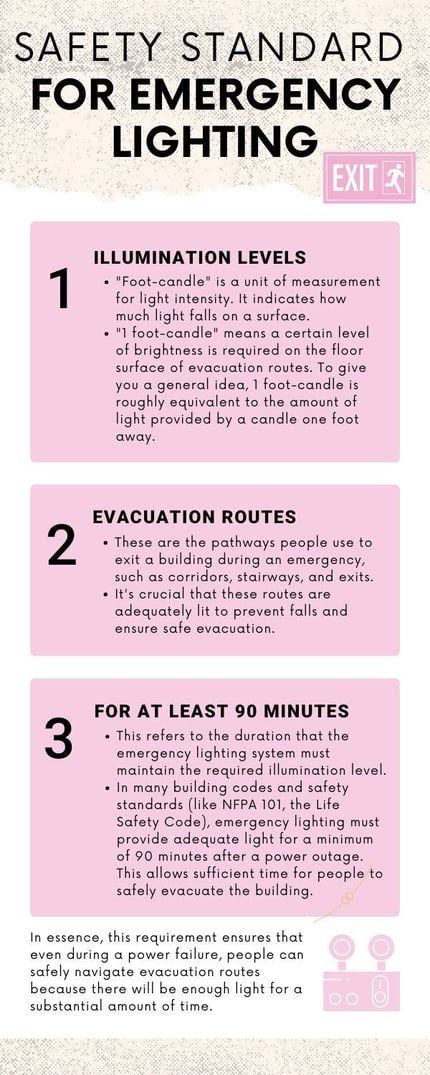
- Illumination of at least 1 foot-candle (10.8 lux) at floor level.
- Emergency lighting must last not less than 90 minutes.
- Exit signs and pathway lights must be clearly visible from any point in the corridor.
- Regular inspection and functional testing are mandatory.
En 1838 And Bs 5266: European And British Standards
EN 1838 focuses on the visual aspects—how bright, how evenly spaced, and how reliable the lights are. It aligns closely with BS 5266, which adds detailed installation and maintenance guidelines.
Highlights:
- Minimum brightness of 1 lux on escape paths.
- Luminaires at every exit and change of direction.
- Emergency lighting must cover all safety equipment, like fire extinguishers.
- Central testing and logbooks are common requirements.
Local Codes And Adaptations
Many countries adapt international standards to local needs. For example, Australia uses AS/NZS 2293, while Singapore references SS 563. Always check your national or regional building codes for specific rules.
Types Of Emergency Lighting And Where They’re Needed
Not all emergency lights do the same job. Standards divide them into categories based on function and location.
Escape Route Lighting
These lights guide people along routes to safety. Placed in corridors, stairwells, and near exits, they must be spaced so that shadows or dark spots don’t hide obstacles.
Open Area (anti-panic) Lighting
Large rooms like auditoriums, shopping halls, or factories need general lighting to prevent panic. Standards specify the minimum area and brightness for these spaces.
High-risk Task Area Lighting
Some places—like hospital operating rooms or chemical labs—need extra-bright emergency lighting so dangerous tasks can be shut down safely.
Standby Lighting
This system restores normal activity in critical areas (like control rooms) when the main power fails. It’s optional, but in some industries, it’s required.
Performance Requirements: What The Standards Demand
Minimum Illumination Levels
Each standard sets a minimum brightness (often in lux or foot-candles) for different areas:
- Escape routes: 1 lux (Europe), 10.8 lux (U.S.)
- Open areas: 0.5 lux (Europe)
- High-risk tasks: 15 lux (Europe)
Duration Of Operation
Emergency lighting must work long enough for everyone to escape. Typical requirements:
- Most buildings: 1 hour (Europe), 90 minutes (U.S.)
- Large assembly spaces: Sometimes 3 hours
Automatic Activation
All systems must switch on automatically when normal power fails. Manual activation is not allowed for main escape routes.
Reliability And Redundancy
Standards require battery backup or other reliable power sources. Some systems use central batteries, others have batteries in each light.
Maintenance And Testing
It’s not enough to install lights—they must work when needed. Most codes demand:
- Monthly functional tests
- Annual full-duration tests
- Maintenance records (often in a logbook)
Here’s a comparison of key requirements in the U.S. and Europe:
| Requirement | U.S. (NFPA 101) | Europe (EN 1838/BS 5266) |
|---|---|---|
| Minimum Brightness | 10.8 lux | 1 lux |
| Duration | 90 minutes | 1 hour (often 3 hours for public) |
| Inspection Frequency | Monthly/Annually | Monthly/Annually |
| Logbook | Recommended | Mandatory |
Exit Signs: An Overlooked Lifesaver
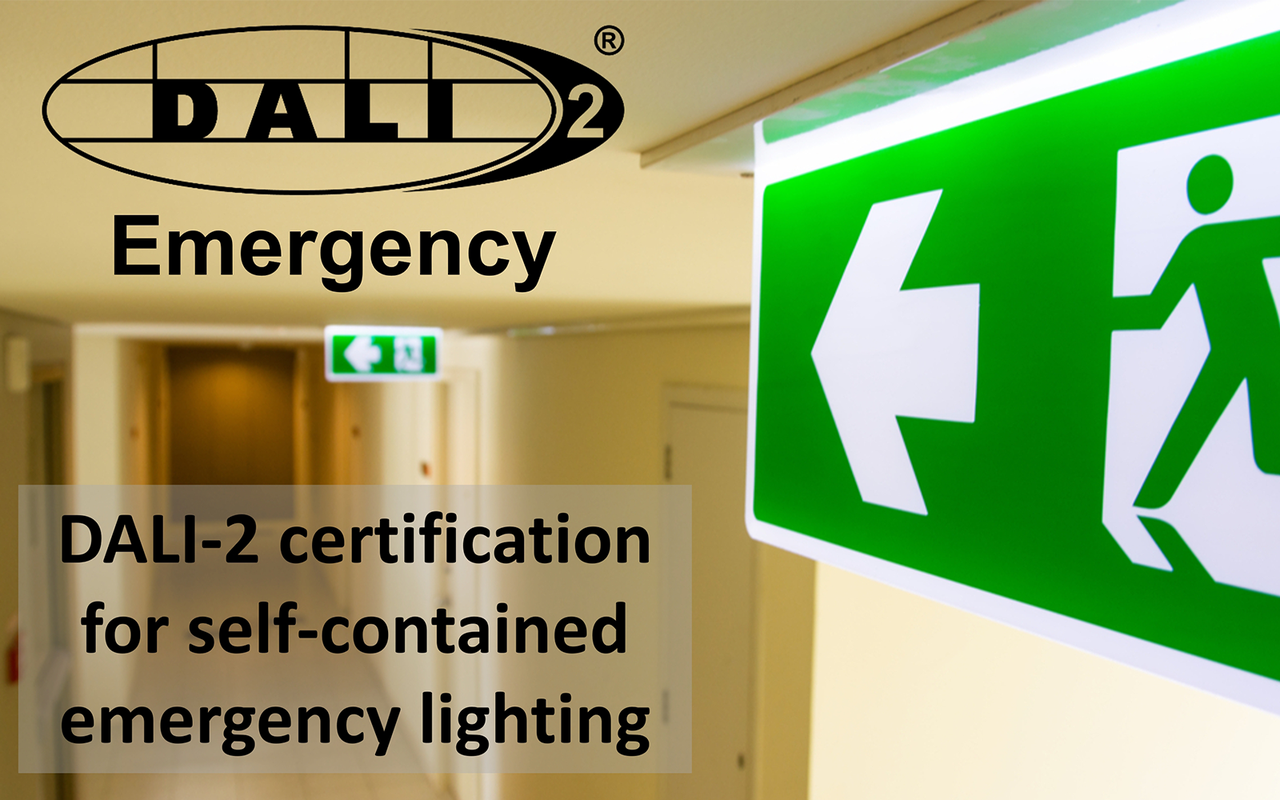
Exit signs are a special kind of emergency lighting. They’re required by every major standard and must be visible, illuminated, and easy to understand—especially for non-native speakers or children.
Key rules include:
- Signs must be continuously lit and remain on during a power outage.
- Arrows must clearly show the direction to the nearest exit.
- International symbols are preferred over words, or both are combined.
- Placement must be at every exit, junction, and change of direction.
A common mistake is to use only battery-powered stick-on signs or not check their batteries. Standards require robust, permanent installation and regular testing.
Technologies Used In Emergency Lighting
Modern emergency lighting relies on several technologies:
Central Battery Systems
A central battery supplies power to all emergency lights in a building. Maintenance is easier, but if the central system fails, all lights are lost. These systems are common in large buildings.
Self-contained (single Point) Units
Each light has its own backup battery. If one fails, others keep working. These units are easier to install in small or existing buildings.
Automatic Test And Monitoring Systems
Newer systems can test themselves and send alerts when a failure is detected. This reduces the risk of unnoticed problems and lowers labor costs.
Led Emergency Lighting
LEDs dominate today’s systems because they use less power, last longer, and are more reliable. Battery backup LED bulbs are especially popular for both commercial and home use. For a practical look at these, see this guide on the best emergency LED bulbs.
Here’s a quick technology comparison:
| Type | Advantages | Drawbacks | Best For |
|---|---|---|---|
| Central Battery | Easy maintenance, single location | Single point of failure, expensive install | Large new buildings |
| Self-Contained | Simple wiring, independent units | More units to maintain, battery replacement | Small/retrofit buildings |
| LED Bulbs | Long life, energy efficient | Initial cost higher | Most buildings, homes |
Common Compliance Mistakes And How To Avoid Them
Even experienced builders or facility managers can make mistakes with emergency lighting. Here are some to watch for:
- Insufficient coverage: Missing lights at stairwells, fire equipment, or changes in direction. Audit your escape routes carefully.
- Wrong placement: Lights too high, causing shadows, or not aligned with exit signs.
- Outdated technology: Old fluorescent or incandescent lights may not meet new efficiency or brightness standards.
- Skipped maintenance: Batteries degrade. Monthly and annual testing must be logged and acted on.
- Ignoring open areas: Emergency lighting is not just for corridors; large rooms need anti-panic lighting.
- No documentation: Most standards require a logbook showing tests and repairs. Digital systems are now common.
Two advanced insights:
- Integration with fire alarms: Some modern systems link emergency lights to fire alarms, boosting brightness or changing color to help guide evacuation. This is not yet required everywhere, but it’s a sign of future standards.
- LED battery backup bulbs: These are now available for home use, plugging into regular sockets and providing hours of light during outages. Learn more about these options in this detailed review.
Emergency Lighting In Special Environments
Not all buildings are the same. Some need extra precautions:
Hospitals
Patients may not be able to move quickly or need medical devices powered during an outage. Standards demand high-brightness, long-duration lighting, and backup for critical care areas.
Factories And Warehouses
Large open spaces with dangerous machinery require both escape and high-risk task area lighting. Regular drills and system checks are especially important.
Schools And Childcare Centers
Children may panic or not understand exit signs. Lighting must be bright, and signs should use clear symbols.
Tall Buildings
Stairwells, elevators, and rooftop exits need special attention. Backup power is often required for longer durations.
Homes And Apartments
While codes may be less strict, safety is still vital. Battery backup LED bulbs can be installed easily for home safety—find recommendations here.
How To Achieve And Maintain Compliance
- Know your local code. Start with national or regional building codes, then check if international standards like ISO 30061 or EN 1838 apply.
- Plan your system. Map all escape routes, exits, large rooms, and high-risk areas. Calculate coverage for each.
- Choose the right technology. Consider future maintenance, building layout, and budget.
- Install according to standards. Use qualified electricians and ensure all lights are tested after installation.
- Set up a maintenance routine. Assign responsibility, schedule monthly and annual tests, and keep a logbook.
- Train staff or residents. People must know what to do in an emergency. Hold regular evacuation drills.
- Stay updated. Standards evolve. Review requirements every few years, especially if your building changes or grows.
Emergency Lighting And Fire Safety Integration
Emergency lighting is part of a broader fire safety strategy. Good practice is to coordinate:
- Fire alarms: Emergency lights should activate together with fire alarms.
- Exit signs: Place them to match evacuation plans.
- Smoke control: Lights should remain visible even with smoke; some standards specify higher placement or brighter lights for this reason.
The Cost Of Non-compliance
Failing to meet emergency lighting standards can have serious consequences:
- Legal penalties: Fines, lawsuits, or even closure of the building.
- Insurance issues: Claims may be denied if systems are found lacking.
- Human risk: Most importantly, lives may be lost or people injured during an emergency.
Data from the U.S. Fire Administration shows that, in commercial building fires, over 50% of injuries occur during evacuation—often linked to poor visibility or confusion. Proper emergency lighting greatly reduces this risk.

The Future Of Emergency Lighting Standards
Standards are evolving with technology. Trends include:
- Smart monitoring: Systems that self-test and alert building managers by app or email.
- Better batteries: Lithium-ion and supercapacitors last longer and need less maintenance.
- Flexible signage: LED signs that can change direction to match evacuation routes in real time.
- Sustainability: Energy-efficient LEDs and solar-powered systems are being added to some codes.
International organizations are working to harmonize standards, making it easier for global companies to comply everywhere.
Frequently Asked Questions
What Is The Main Purpose Of Emergency Lighting Safety Standards?
The main purpose is to ensure that emergency lighting works reliably during power loss, guiding people safely out of a building and minimizing injury or death. Standards set rules for brightness, duration, placement, and maintenance, so systems are always ready when needed.
How Often Must Emergency Lighting Be Tested?
Most standards require a monthly functional test (to check if lights come on) and a yearly full-duration test (to verify they last the required time). All results should be recorded in a logbook. Some advanced systems can self-test and report results automatically.
Are Led Bulbs Allowed For Emergency Lighting?
Yes, LED bulbs are now the preferred technology due to their long life, energy savings, and reliability. Many standards specifically mention or recommend LEDs. For home or small business use, battery backup LED bulbs are a practical and compliant solution.
What Happens If I Don’t Follow Emergency Lighting Standards?
You could face legal action, fines, or insurance problems. Most importantly, you put lives at risk. In many countries, building inspectors can close non-compliant buildings or require expensive upgrades. After an incident, investigators will check if lighting standards were followed.
Where Can I Find More Details About Specific Emergency Lighting Standards?
For in-depth information, check the websites of organizations like the NFPA (for U.S. standards), the British Standards Institution (for BS 5266), or the International Organization for Standardization for ISO 30061. Another reliable overview is available at Wikipedia’s emergency lighting article.
Emergency lighting is a silent guardian—rarely noticed until disaster strikes. Yet, its importance cannot be overstated. By understanding and following emergency lighting safety standards, you don’t just meet legal requirements; you protect lives. Stay informed, keep your systems tested, and remember: a few well-placed lights, maintained and checked, can make all the difference between chaos and safe escape.