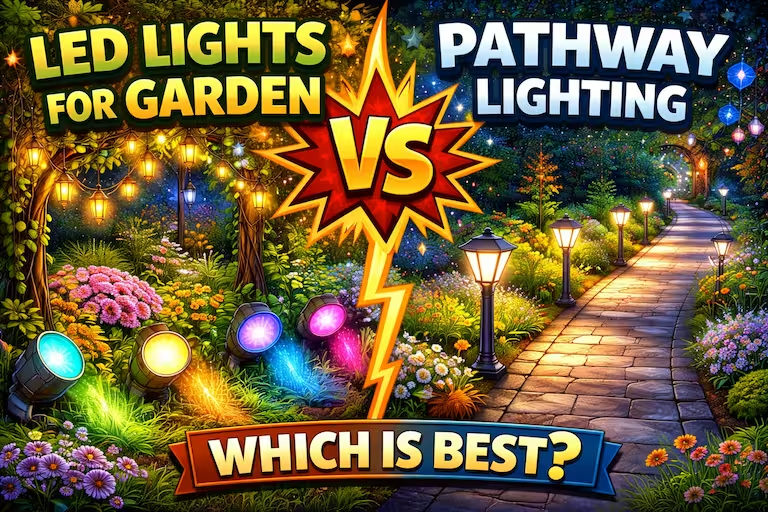
If you are planning to light up your outdoor space, you may be wondering about the best way to do it. Two popular options are LED lights for gardens and LED pathway lighting. At first glance, they may seem similar, but they serve different purposes and have unique features. Choosing the right type not only transforms your space but also improves safety, atmosphere, and energy use. In this article, you will learn how these two lighting solutions compare, what really matters when picking one, and how to make the most of your investment.
Understanding Led Garden Lights
LED garden lights are designed to highlight the beauty of your plants, trees, and landscape features. They bring out colors and shapes during the night, making your garden look magical. These lights are often used to show off flower beds, shrubs, statues, fountains, or decorative walls.
Unlike regular bulbs, LEDs use very little energy and last much longer. Most LED garden lights are weatherproof and can handle rain, snow, and sun for years. They come in many shapes, such as spotlights, floodlights, stake lights, or string lights.
This variety lets you create dramatic effects or soft mood lighting, depending on your style.
One non-obvious benefit is that LED garden lights can attract fewer insects compared to older bulbs. This is because LEDs do not emit as much heat or ultraviolet light. Another detail beginners miss: the color temperature of LED garden lights can affect how plants look at night. Warm white makes flowers and greenery feel cozy, while cool white gives a fresh, modern look.
Exploring Led Pathway Lighting
LED pathway lighting has a clear job: to guide people safely along walkways, driveways, and steps. These lights are usually low to the ground and spaced evenly to show the way without being too bright. They help prevent trips and falls, which is especially important for children, elderly visitors, or during bad weather.
Pathway lights can be simple or decorative. Some look like small lanterns, while others are sleek and modern. Many are solar-powered, so you do not need wiring or electricity. This makes them easy to install even if you have no DIY experience.
A detail often overlooked: pathway lights should avoid glare. Lights that are too bright can blind people, making it harder to see where you are walking. The best pathway lights direct light downwards, creating a gentle glow on the ground. Another point: using motion sensors can save energy, as lights only turn on when someone walks by.

Key Differences Between Garden And Pathway Led Lights
To make the right choice, you need to know how garden lights and pathway lights are different. The table below highlights their main differences:
| Feature | LED Garden Lights | LED Pathway Lighting |
|---|---|---|
| Primary Purpose | Highlight plants & landscape | Guide and ensure safe walking |
| Light Direction | Upwards, accent, or wide spread | Downwards, focused on paths |
| Design Styles | Spotlights, string, flood, stake | Lantern, bollard, recessed, solar |
| Brightness (Lumens) | 150-1000+ (varies by feature) | 50-300 (gentle glow) |
| Installation | May need wiring or stakes | Mainly stake, solar, or low-voltage |
| Controls | Timers, smart, manual | Motion sensor, dusk-to-dawn |
| Impact on Mood | Creates drama, beauty, focus | Safety, guidance, subtle ambiance |
These differences mean you should not use garden lights for pathways or vice versa. Each type is specialized for its own task.
Choosing The Right Led Lights: What Really Matters
When you decide between LED garden lights and LED pathway lighting, several important factors should guide your choice. Here is what matters most:
1. Purpose And Placement
Think about your main goal. Do you want to show off your plants and create a relaxing mood? Or is your top concern safe walking after dark? If you want both, you may need a mix of both types. For example, use spotlights for trees and pathway lights along walkways.
Tip: Sketch your outdoor area and mark where each light will go before you buy anything.
2. Brightness And Coverage
Garden lights often need to be brighter to make features stand out. For example, a spotlight on a tree may use 300-500 lumens. Pathway lights should be softer—usually 50-150 lumens—so they do not cause glare or ruin night vision.
A common mistake is using pathway lights that are too bright. This can spoil the cozy feel of your garden and annoy your neighbors.
3. Energy Efficiency
Both types use LEDs, but pathway lights can be even more efficient if they are solar-powered or use motion sensors. If you have a large garden, check the energy usage (watts) and look for ENERGY STAR labels.
4. Durability And Weather Resistance
Outdoor lights must survive rain, snow, sun, and sometimes pets or lawnmowers. Look for a high IP rating (Ingress Protection). An IP65 or higher is good for most outdoor setups.
5. Controls And Automation
Garden lights often use timers or smart controls, so they turn on at sunset or when you want to show off your yard. Pathway lights may use dusk-to-dawn sensors or turn on only when someone walks nearby. Smart controls can help you save power and customize your lighting easily.
6. Design And Style
Pathway lights are part of your landscape, so their look matters. Choose styles that match your home and garden, from classic lanterns to modern stainless steel. For garden lights, focus on hidden fixtures if you want the plants to be the star.
Types Of Led Garden Lights
There are several main types of LED garden lights. Each has its own use and effect.
Spotlights
Spotlights create strong, focused beams to highlight trees, statues, or special plants. They are great for dramatic effects and can be placed on the ground or hidden in bushes.
Floodlights
Floodlights provide wide, bright coverage. They work well for lighting up large flower beds or garden walls. Be careful not to make them too bright, as this can wash out colors.
Stake Lights
Stake lights are easy to install and move. You simply push them into the soil near plants, borders, or along garden edges. They offer gentle accent lighting and are perfect for small beds.
String Lights
String lights are popular for parties or casual evenings. You can wrap them around trees, trellises, or fences. They add a festive, romantic touch without being too bright.
Deck And Step Lights
Installed along garden steps or deck edges, these lights prevent trips and add style. They are usually low-profile and blend in during the day.
Underwater Lights
If your garden has a pond or fountain, waterproof LED lights can highlight water features and create reflections at night.
Types Of Led Pathway Lighting
LED pathway lights also come in various forms, each suited to different needs.
Bollard Lights
These are short, sturdy posts with a light on top. They are often used in public gardens and driveways and provide good, even coverage along paths.
Lantern-style Lights
Classic and decorative, these lights mimic old lanterns. They add charm and a vintage look to garden paths.
Recessed Path Lights
Built into the ground or steps, these lights are almost invisible during the day. They are ideal for modern designs and prevent tripping hazards.
Solar Path Lights
Solar lights are easy to install—no wires needed. They charge during the day and turn on at night. They are perfect for long paths or areas far from electricity.
Motion Sensor Lights
Placed at the start or key points of a path, these lights only turn on when someone walks by. They save energy and add extra security.
Low-voltage Path Lights
These lights use a transformer to reduce electricity, making them safe and energy-efficient. They often provide brighter, more reliable light than solar versions.

Comparing Installation: Garden Vs Pathway Led Lights
How you install these lights is as important as the lights themselves. Here is a side-by-side look:
| Aspect | Garden LED Lights | Pathway LED Lights |
|---|---|---|
| Wiring Needs | May need wiring for spotlights/floodlights | Mainly solar or low-voltage, simple wiring |
| Placement | Flexible—can hide among plants | Needs even spacing along paths |
| Complexity | Can be more complex for feature lighting | Usually easier for DIY installation |
| Time to Install | 1-3 hours, depending on features | 30 minutes to 2 hours for most paths |
| Common Mistakes | Poor beam direction, over-lighting | Uneven spacing, glare issues |
One non-obvious tip: Use adjustable fixtures for garden spotlights so you can change the beam angle as plants grow. For pathway lights, test at night before fixing them in place to check for dark spots or glare.
Cost Analysis: Garden Vs Pathway Led Lighting
Cost is a major concern for many homeowners. Both types of LED lights save energy, but there are differences in upfront and long-term costs.
Garden Led Lights
- Price per fixture: $20-$100+ (spotlights, floodlights, underwater lights)
- Installation: May need professional help for wiring ($100-$300 extra)
- Operating cost: Low (LEDs), but can add up if you have many bright lights
Pathway Led Lights
- Price per fixture: $10-$50 (solar, low-voltage)
- Installation: Often DIY, little or no extra cost
- Operating cost: Very low, especially solar-powered
A common mistake is choosing cheap lights that do not last. Quality fixtures cost more at first but save money over the years due to fewer replacements and lower energy bills.
Example Cost Scenario
Suppose you want to light a 30-foot garden path and a small flower bed.
- Pathway: 8 solar path lights ($20 each) = $160, easy DIY install.
- Garden: 3 spotlights ($60 each) + 2 stake lights ($25 each) = $230, plus possible wiring costs.
Total: Pathway lighting is usually cheaper and simpler, but garden lighting offers more dramatic results.
Energy Use And Environmental Impact
LED technology is known for its energy efficiency. Compared to old-style bulbs, LEDs use up to 80% less power and last 10-20 times longer. This means lower electricity bills and fewer bulbs in landfills.
Pathway lights, especially solar, have the lowest impact. They use sunlight and do not add to your energy bill. Garden lights can use more energy if you pick high-lumen spotlights or floodlights, but they are still far better than halogen or incandescent bulbs.
Insight: Even small upgrades—like adding timers or motion sensors—can cut your outdoor lighting energy use by 30-50%.
Safety And Security Considerations
Lighting is not just about looks. It also protects your home and visitors.
- Garden LED lights can deter burglars by removing dark hiding spots around your property.
- Pathway lighting prevents accidents on steps, uneven ground, or wet surfaces.
- Motion sensors add a layer of security, as sudden light can scare off intruders.
A common mistake: forgetting to light corners or steps. Always walk your paths at night to spot any missed areas.
Common Mistakes When Choosing Outdoor Led Lights
Many people make simple errors that spoil their lighting plans. Here are the most common:
- Over-lighting: Too many bright lights can make your yard look harsh and waste energy.
- Poor placement: Lights aimed at windows or neighbors cause glare and complaints.
- Mixing color temperatures: Warm and cool lights can clash, ruining the mood.
- Ignoring maintenance: Cheaper fixtures may rust or stop working quickly.
- Skipping a plan: Not mapping out your lights leads to dark spots and wasted money.
Take time to plan your layout and test your setup before final installation.
How To Combine Garden And Pathway Led Lighting
You do not have to pick just one type. Smart design uses both for the best results.
- Use pathway lights for safety along all walkways and steps.
- Place spotlights on trees or statues for drama.
- Add stake or string lights around flower beds for a soft glow.
- Choose matching styles and color temperatures for a unified look.
Expert tip: Layer your lighting. For example, start with pathway lights, then add accent garden lights. This avoids over-lighting and lets you adjust brightness for different occasions.
Maintenance Tips For Outdoor Led Lights
Even the best lights need some care to keep working well.
- Clean lenses every few months to remove dirt and pollen.
- Check for damage after storms or lawn work.
- Replace batteries in solar lights once a year for best performance.
- Trim plants that block light beams or cause shadows.
- Test timers and sensors at least twice a year.
A small effort in maintenance will keep your outdoor lights bright and reliable for years.
Real-world Examples
Example 1: Family-friendly Garden
A family with young children uses low-voltage pathway lights along their garden path for safety. They add a few warm white stake lights near flower beds to create a cozy mood for evening play. This setup uses less than 30 watts and costs under $200 for a small yard.
Example 2: Modern Home With Dramatic Effects
A homeowner wants to highlight several trees and a water feature. They use LED spotlights (400 lumens each) for the trees, underwater LED lights for the fountain, and recessed pathway lights along a stone walkway. The total cost is higher ($600+), but the effect is stunning and energy use remains low.
Example 3: Eco-friendly Path
A couple chooses solar pathway lights for their entire driveway, needing no wiring or electricity. They add a few motion-sensor LED floodlights near entrances for security. Their outdoor lighting is powered almost entirely by the sun.
Top Brands And Products To Consider
Some brands are known for reliable outdoor LED lights. Examples include Philips, Ring, Hampton Bay, and Malibu. Always check customer reviews and IP ratings before buying.
For more inspiration and product suggestions, check out the best outdoor LED lights for 2026.
Future Trends In Outdoor Led Lighting
The world of outdoor lighting is changing fast. Here is what to expect in the next few years:
- Smart controls: More lights can connect to your phone or smart home system.
- Color-changing LEDs: Easily switch between colors for parties or holidays.
- Better solar panels: Newer models charge faster and work even in cloudy weather.
- Eco-friendly materials: More brands use recycled plastic or metal.
Staying updated with these trends can help you make a future-proof investment.

Frequently Asked Questions
What Is The Main Difference Between Garden And Pathway Led Lights?
Garden LED lights are designed to highlight plants, trees, or landscape features, often using spotlights or accent lights. Pathway LED lights focus on guiding people safely along walkways, usually with softer, downward-facing light. The key difference is their primary function: mood and decoration versus safety and guidance.
Can I Use Garden Led Lights For My Walkway?
It is not recommended. Garden lights are often brighter or have a wide beam, which can cause glare on walkways. Pathway lights are designed to light the ground evenly and avoid blinding people. If you must use garden lights, choose fixtures with adjustable beams and point them away from eyes.
Are Solar Pathway Lights Better Than Wired Ones?
Solar pathway lights are easy to install and use no electricity, making them great for eco-friendly setups or areas far from power sources. However, wired pathway lights (especially low-voltage types) are often brighter and more reliable in all weather. The best choice depends on your needs, budget, and sunlight availability.
How Many Lumens Do I Need For Outdoor Led Pathway Lighting?
For most walkways, 50-150 lumens per light is enough. This creates a soft glow that makes paths safe without being too bright. For longer or wider paths, you may use slightly higher lumens, but avoid going over 300 lumens per fixture to prevent glare.
Where Can I Find More Information On The Best Outdoor Led Lights?
You can explore expert guides and reviews at the best outdoor LED lights for 2026, or visit trusted sources like the U.S. Department of Energy for technical information.
Lighting your garden and pathways with LEDs is one of the best ways to enjoy your outdoor space year-round. By understanding the unique strengths of each type, planning your layout, and avoiding common mistakes, you can create a safe, beautiful, and energy-efficient environment for your family and guests.