
Many people enjoy the benefits of LED lights—they save energy, last long, and come in many shapes and colors. Yet, a growing number of people complain about eye strain, headaches, or feeling uncomfortable when spending time under certain LED bulbs. The question is: Why do some LEDs cause eye strain, while others seem fine? If you have ever felt tired eyes after working under LED lights, you are not alone. This guide explains the real reasons behind LED-related discomfort, the science involved, and what you can do to protect your eyes without giving up on LED technology.
Let’s dive deep into the world of LEDs, exploring light quality, technology differences, and easy ways to make your lighting healthier for your eyes.
Understanding Eye Strain And Led Lighting
Eye strain (also called asthenopia) is a group of symptoms—tired eyes, headaches, blurred vision, or dryness—usually caused by long periods of intense use or exposure to harsh environments. With the rise of LED lighting in homes, offices, and public places, reports of eye discomfort have increased. But why does this happen?
What Makes Led Light Different?
LEDs (Light Emitting Diodes) are not like traditional incandescent or fluorescent bulbs. They create light using a semiconductor, which is very efficient. However, this technology also brings some side effects:
- More blue light: LEDs, especially cool white types, emit more blue wavelengths.
- Flicker: Some LEDs turn on and off quickly (many times per second), sometimes faster than the human eye can see.
- Color rendering: Not all LEDs show colors equally well.
- Glare: LEDs can be very bright from a small point.
These differences affect how comfortable our eyes feel, especially during long periods of exposure.
How Eye Strain Develops
When our eyes are exposed to poor lighting conditions, they work harder to focus, adapt to brightness, or process colors. Over time, this can lead to fatigue, discomfort, and even long-term issues. With LEDs, this happens most often because of flicker, high blue light, or harsh glare.
The Main Reasons Some LEDs Cause Eye Strain
Let’s look at the key factors that make some LED bulbs uncomfortable or even harmful for your eyes.
1. Excessive Blue Light
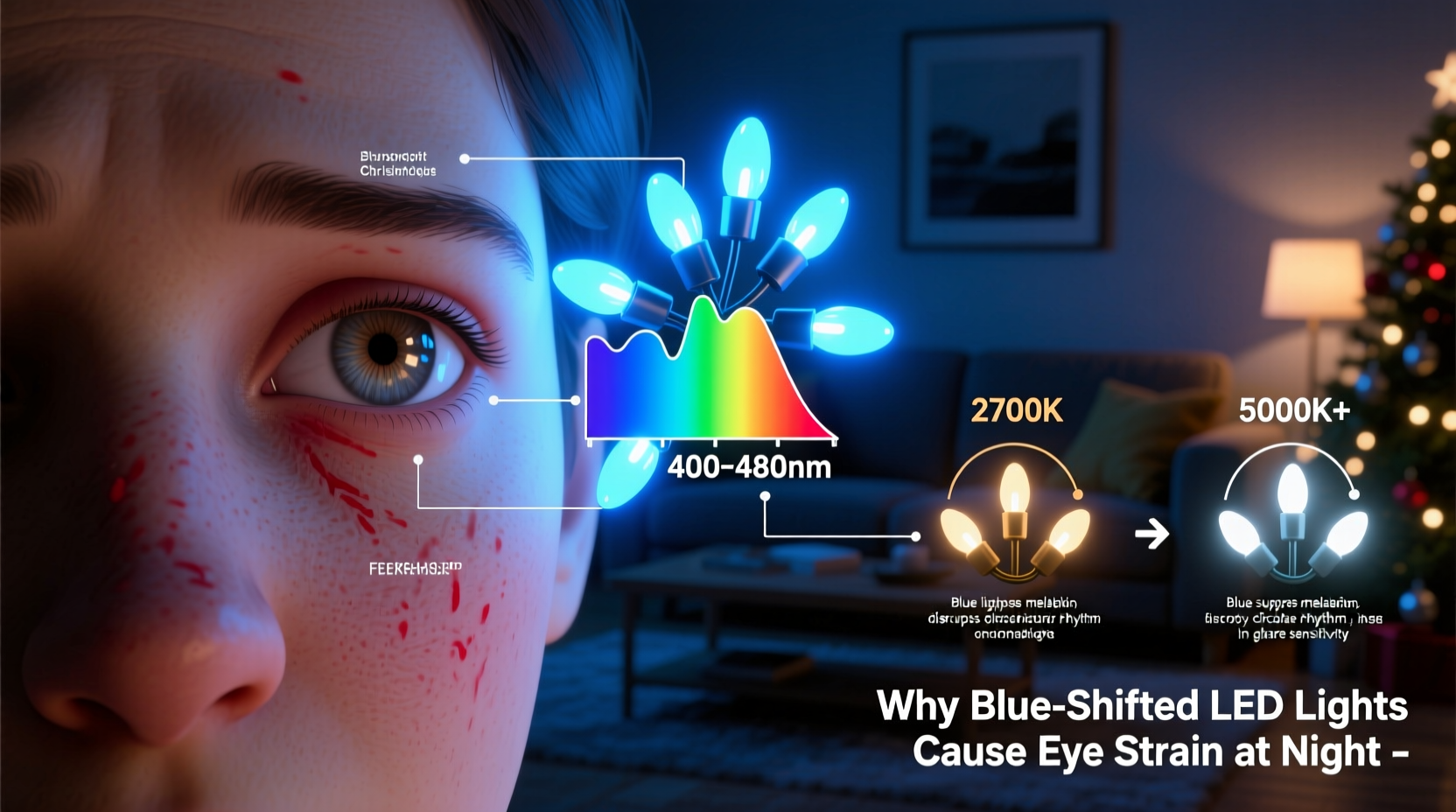
Most LED bulbs, especially those labeled “cool white” or “daylight,” emit a strong amount of blue light (wavelengths between 400–490 nm). Blue light is not new—sunlight contains it too—but most people now spend long hours indoors under artificial lighting and on screens, increasing total exposure.
Why Blue Light Matters
- Blue light scatters more inside the eye, making it harder to focus.
- It suppresses melatonin, disturbing sleep if used at night.
- High blue light can cause more retinal stress, especially over years.
Real Data
A 2019 study from the French Agency for Food, Environmental and Occupational Health & Safety found that blue-rich white LEDs can damage retinal cells at high exposures. While normal home use is much lower, constant exposure adds up.
Not All Blue Light Is Bad
It’s important to know that natural blue light helps control our body clock and mood. Problems only arise when there is too much artificial blue light, especially from LEDs with poor color balance.
2. Invisible Flicker
Many people do not realize that LED bulbs can flicker—turn on and off rapidly—due to how they are powered. Unlike old incandescent bulbs that glow steadily, some LEDs flicker at 100–120 times per second (Hz), or even faster.
Why Flicker Happens
- LEDs need a driver (a circuit that controls power).
- Cheap or poorly designed drivers cannot smooth out electric current well.
- As a result, the LED blinks rapidly, though not always visibly.
Effects On The Eyes
- Invisible flicker can still cause headaches, eye strain, or trouble concentrating.
- Sensitive people may notice eyestrain even if they don’t “see” the flicker.
- Children and migraine sufferers are more at risk.
Research Insight
A 2020 report in the journal Lighting Research & Technology found that LED flicker at certain frequencies increases discomfort and reduces reading speed.
3. Poor Color Rendering (low Cri)
The Color Rendering Index (CRI) shows how well a light source displays colors compared to sunlight (perfect score: 100). Many cheap LEDs have a CRI below 80, meaning they make colors look dull or strange.
Why Cri Matters
- Low CRI makes it harder for eyes to distinguish colors, increasing fatigue.
- High CRI (90+) LEDs are gentler for reading, art, and detail work.
Example
A room lit with low CRI LEDs can make skin look gray, or make it hard to tell navy blue from black. Your eyes must work harder to “correct” these colors mentally.
4. Glare And Brightness
Some LED bulbs produce a very bright, focused point of light, unlike older bulbs that spread light softly. This glare can be blinding, especially in overhead lights or direct-view bulbs.
Causes Of Glare
- Small, high-intensity LED chips.
- Clear glass bulbs with no diffuser.
- Bad lamp design (bare bulbs).
How Glare Affects You
- Causes “squinting” and eye fatigue.
- Makes reading or computer work uncomfortable.
- Increases risk of headaches.
5. Color Temperature Mismatch
LEDs come in different “color temperatures” measured in Kelvin (K). Cool white (5000K–6500K) is blue-rich and harsh; warm white (2700K–3000K) is softer and more like sunset.
Why It Matters
- Using cool white LEDs at night disrupts your body’s sleep cycle and causes more eye fatigue.
- Mixing several color temperatures in one room confuses the eyes.
Pro Tip
For most homes and offices, warm white LEDs (2700K–3000K) reduce eye strain and help you relax.
6. Poor Quality Or Cheap Leds
Not all LED bulbs are made with care. Cheaper LEDs often skip good drivers, use poor-quality chips, and do not meet safety standards.
Risks Of Cheap Leds
- More flicker and unstable brightness.
- Lower CRI and more blue light.
- Shorter lifespan and higher fire risk.
How To Spot Them
- No clear brand or certifications (like CE, UL, or Energy Star).
- Very low price.
- Poor reviews or vague packaging.
If you are searching for bulbs that focus on eye comfort, the guide on Best LED Bulbs for Eye Comfort offers some expert picks and shopping tips.
7. Poorly Designed Fixtures
Even a good LED bulb can cause eye strain if used in a bad fixture. Open or bare fixtures, shiny reflectors, or poorly placed lights make glare and contrast problems worse.
Practical Example
A desk lamp with a bright LED and a shiny metal shade may create harsh reflections on your papers or screen, straining your eyes.
8. Incorrect Placement And Over-illumination
Too many bright LEDs in a small room or placing LEDs directly in your field of view can cause over-illumination, which is just as bad as too little light.
Effects
- Forces your eyes to constantly adjust.
- Highlights dust and glare on screens.
- Increases tiredness.
9. Lack Of Natural Light
Relying only on artificial LED light, especially in windowless rooms, can make eye strain worse. Our eyes are evolved for a mix of natural daylight and softer artificial light.
Non-obvious Insight
Even the best LED cannot fully replace the dynamic, full-spectrum nature of sunlight. Taking short breaks near a window gives your eyes a chance to reset.

How Led Bulbs Compare To Other Lighting Types
To better understand why some LEDs cause eye strain, let’s compare them to other common lighting types.
| Lighting Type | Blue Light | Flicker Risk | CRI | Eye Comfort |
|---|---|---|---|---|
| Incandescent | Low | Very Low | 95-100 | High |
| Fluorescent | Medium | Medium | 75-85 | Medium |
| LED (cheap) | High | High | 70-80 | Low |
| LED (quality) | Medium | Low | 90+ | High |
This comparison shows why switching to high-quality LEDs is important for eye comfort.
Common Myths About Leds And Eye Strain
Many people believe that all LED lights are bad for your eyes. This is not true. Let’s clear up some confusion:
- Myth 1: All LEDs cause eye strain.
- Reality: Only poorly made or badly used LEDs tend to cause problems.
- Myth 2: Blue light from LEDs is always harmful.
- Reality: Blue light is natural, but too much artificial blue is uncomfortable.
- Myth 3: Flicker is only a problem if you can see it.
- Reality: Even invisible flicker can cause headaches and strain.
Why Some People Are More Sensitive
Not everyone feels the same discomfort under LED lights. Here are some reasons:
- Genetics: Some people’s eyes are naturally more sensitive to flicker or blue light.
- Age: Children and older adults are often more affected.
- Existing conditions: People with migraines, epilepsy, or dry eyes are more likely to feel discomfort.
If you have noticed that you feel tired or irritable under certain lighting, it is worth paying attention to the type and quality of your LEDs.
How To Choose Eye-friendly Leds
Choosing the right LED bulb is the single most important step to prevent eye strain. Here’s what to look for:
1. High Cri Rating
Pick bulbs labeled CRI 90+. These bulbs show colors more naturally and reduce eye effort.
2. Warm Color Temperature
Choose bulbs in the 2700K–3000K range for living spaces and bedrooms. Cooler (4000K+) bulbs can be used in garages or workspaces if needed, but avoid them for long reading or screen work.
3. Flicker-free Design
Look for bulbs labeled flicker-free or with a certified low-flicker driver. Test at home by using your smartphone camera—if you see bands or flashing on the screen, the bulb may flicker.
4. Dimmable And Well-designed
Use dimmable LEDs with compatible dimmer switches. This lets you adjust brightness and reduce glare, especially at night.
5. Trusted Brands
Buy from well-known brands with safety certifications. Avoid unbranded, ultra-cheap bulbs from unknown sellers.
For a list of recommended bulbs tested for comfort, the resource at Best LED Bulbs for Eye Comfort provides helpful reviews and guidance.
Improving Your Lighting Environment
Your bulbs are only one part of the story. The way you use and arrange lighting matters too.
Layer Your Lighting
Use a mix of ambient, task, and accent lighting:
- Ambient: Main room lighting (ceiling fixtures).
- Task: Desk lamps, reading lights.
- Accent: Wall lights, under-cabinet strips.
This approach reduces harsh contrasts and glare.
Use Diffusers And Shades
Install lampshades or diffusers on bright LEDs. This spreads the light, reducing glare and making it more gentle on your eyes.
Adjust Placement
Keep lights out of your direct line of sight. Position desk lamps to the side, not directly in front of your eyes.
Control Brightness
Use dimmers or multiple lamps to adjust brightness during the day and evening. Too much light is just as tiring as too little.
Take Regular Breaks
Follow the 20-20-20 rule: Every 20 minutes, look at something 20 feet away for 20 seconds. This helps your eyes relax, especially if you work on screens under LED lighting.
Eye-friendly Alternatives And Accessories
If you are especially sensitive to LEDs, there are ways to make your space more comfortable:
- LED bulbs with reduced blue light: Some brands offer LEDs with special coatings or chips that cut down on blue light.
- Clip-on filters: Orange or amber plastic covers for desk lamps.
- Smart bulbs: Allow you to change color temperature during the day.
- Blue-blocking glasses: Can help if you work on screens for hours.
How To Test If Your Led Bulb Is Causing Eye Strain
Not sure if your lighting is the problem? Here’s a simple checklist:
- Do your eyes feel tired or dry after working under certain lights?
- Do you get headaches in rooms with bright or cool-white LEDs?
- Does reading or screen work feel harder in some places than others?
- Try replacing the bulb with a warm, high-CRI, flicker-free LED. Notice if the discomfort improves.
You can also test for flicker by pointing your phone camera at the bulb. Visible bands or flickering on the screen mean the light is not stable.
Led Technology Is Improving
The good news: LED technology is getting better. More companies now focus on eye comfort and health, offering bulbs with:
- Lower blue light
- High CRI
- Flicker-free drivers
- Adjustable color temperature
When shopping, always check the label, and don’t hesitate to try several bulbs to find what feels best for your eyes. You can also consult expert guides like Best LED Bulbs for Eye Comfort for the latest product advice.
Simple Lighting Upgrades For Healthier Eyes
If you want to make quick changes, consider these steps:
| Problem | Solution | Result |
|---|---|---|
| Harsh glare from overhead LED | Add a lampshade or diffuser | Softer, more comfortable light |
| Cool white bulbs in bedroom | Switch to warm (2700K) LED | Better relaxation and sleep |
| Cheap, flickering bulbs | Replace with high-quality, flicker-free LEDs | Reduced eye fatigue |
| Direct light in eyes at desk | Reposition or use task lamp with shade | No more squinting |
| No natural light | Take short breaks near a window | Eyes reset and relax |
These small changes can make a big difference in your daily comfort.
When To See A Professional
If you continue to have eye strain, headaches, or vision problems even after improving your lighting, see an eye doctor. Sometimes, underlying conditions (like dry eye, need for glasses, or other medical issues) can also cause these symptoms.

The Role Of Industry Standards And Regulations
Governments and health organizations are starting to recognize the risks of poor-quality LED lighting. Some new standards require:
- Lower flicker levels
- Minimum CRI ratings
- Safety certifications
In the European Union, for example, new rules limit blue light and require clearer labeling on bulb packaging. Always look for bulbs that meet recognized standards.
If you want to go deeper into the science of light and eye health, the Wikipedia LED page covers technical and historical details.
Frequently Asked Questions
What Is The Safest Color Temperature For Led Bulbs?
For most homes, 2700K to 3000K (warm white) is the safest and most comfortable. This range is closest to traditional incandescent light and is gentle on the eyes, especially at night.
Can Using Leds At Night Affect My Sleep?
Yes. Blue-rich LEDs can suppress melatonin, making it harder to fall asleep. Use warm white or dimmable LEDs in bedrooms and avoid bright, cool-white lighting before bed.
How Do I Know If My Led Bulb Is Flicker-free?
Check the packaging for “flicker-free” claims or certifications. You can also use your smartphone camera—point it at the bulb, and if you see lines or flickering on the screen, the bulb may not be stable.
Are Expensive Led Bulbs Always Better For Eye Comfort?
Not always, but quality bulbs from reputable brands usually have better drivers (less flicker), higher CRI, and safer color balance. Look for certifications and detailed product specs, not just price.
Is Eye Strain From Leds Permanent?
Eye strain from poor lighting is usually temporary. Once you improve your lighting, symptoms go away. However, constant exposure to harsh, flickering, or blue-rich LEDs over years could contribute to long-term issues, so prevention is important.
The world of LED lighting is changing fast. By understanding the reasons behind eye strain and making smart choices, you can enjoy the benefits of LEDs without the discomfort. Don’t settle for poor-quality bulbs—your eyes deserve the best.
